
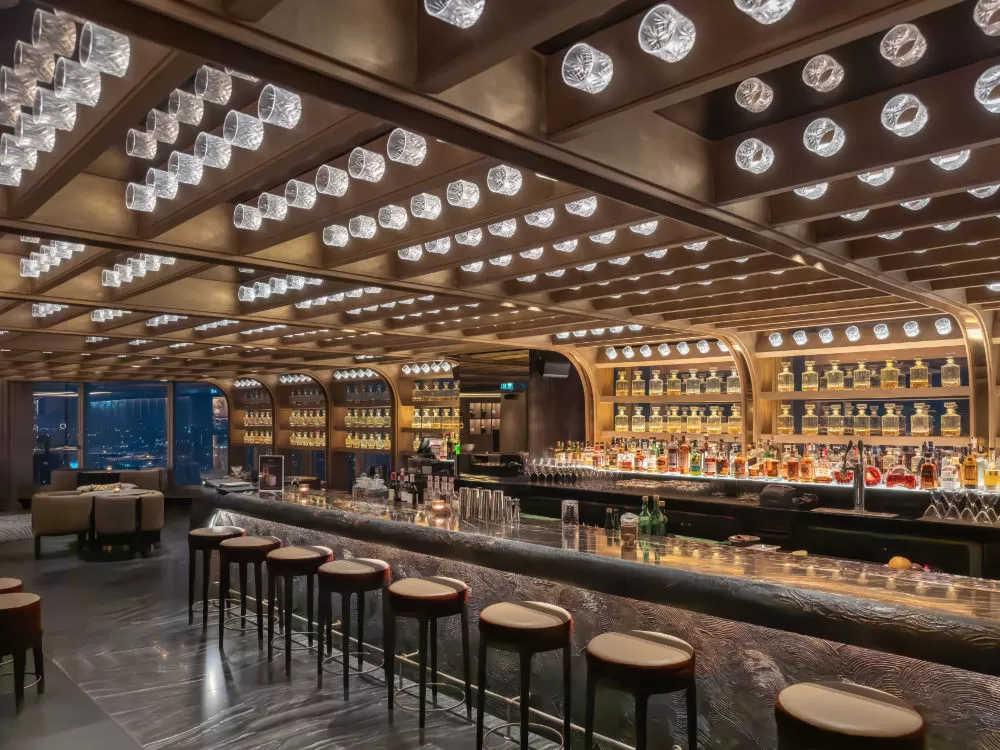
Walk into a room you love and try to describe why. It is rarely one thing. It is the ceiling height and the way the light lands at four in the afternoon. The texture of a lime-washed wall. The sound, or the absence of it. The distance the staff keep until they’re needed.
None of that survives a photograph intact. And most hospitality websites rely on photographs to do all of it.
Atmosphere is a set of decisions, not a mood
Whoever designed your room didn’t design “calm” or “warmth”. They made hundreds of specific decisions — materials, proportions, light levels, acoustics — that add up to calm or warmth. A website can’t copy those decisions literally. It can translate them.
Light becomes contrast and tone
A candlelit dining room and a café flooded with morning light should not share a white page and a black typeface. The tonal range of a site — how deep its darks run, how soft its lights are, how much contrast it allows itself — does the work that dimmers and window placement do in the room.
Material becomes type and space
Typefaces have weight and grain, the way stone, oak and linen do. Some feel carved, some written by hand, some engineered. Whitespace works like the space between tables: generous, it signals that nobody is in a hurry; cramped, it tells the guest the room is trying to fit in one more cover.
Sound becomes rhythm
A spa corridor is quiet. A wine bar on a Friday night is not. Both have a rhythm, and a website has one too — in how fast things move, how much appears at once, and how long a guest is allowed to linger before something asks for their attention. A site with the wrong rhythm feels wrong even when every image is right.
The translation is the work
This is the part of a project that can’t be handed to a theme or reduced to a style guide. It starts in the room, not in a design tool — with the space, the people who run it, and the guests it was built for.
How that translation happens is different for every venue, and it’s the part I most enjoy working through with an owner in person. The measure of success is simple, though: a guest who visits the site and then walks through the door should feel they’ve arrived somewhere they already know.
If your website could belong to any venue in your category, the atmosphere hasn’t made the trip. Tell me about the room, and I’ll tell you what it would take to carry it across.