
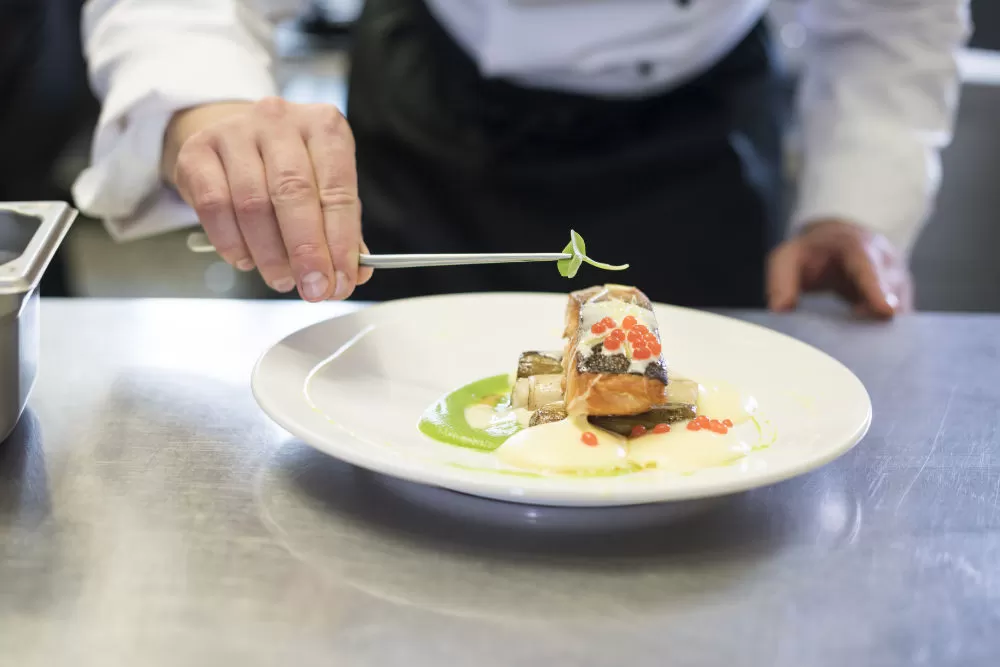
A fine-dining room is the sum of a thousand deliberate decisions. The weight of the cutlery. The distance between tables. The color of the light at nine o’clock. The plate chosen for one course and no other.
Then the website goes live on a theme that cost less than a bottle from the list, already running on thousands of other sites — some of them selling pizza, some of them selling plumbing.
Guests recognize the template before they read the menu
Guests who book fine dining browse a lot of fine-dining websites. They may not know the word “template”, but they know the pattern: the full-width slideshow, the script logo centered over a dimmed photograph, the floating booking button, the same three-column footer they saw an hour ago on another restaurant’s site.
Recognition is the problem. The moment a guest recognizes the frame, the restaurant inside it starts to feel ordinary — and ordinary is the one thing a fine-dining brand cannot afford to be.
Built for everyone, fitted to no one
A template is designed to hold any business’s content. That means the content bends to the template, not the other way around.
A twelve-course tasting menu is forced into a grid designed for a café’s sandwich list. A chef’s philosophy is squeezed into an “About us” block beside a stock icon. Seasonal changes the kitchen makes weekly wait for someone who knows which settings panel to open. The site ends up describing a restaurant that doesn’t quite exist.
The costs that never appear on the invoice
Templates look inexpensive at the point of purchase. The real cost arrives later:
- Updates that break the booking button on a Friday afternoon
- Pages weighed down by features the restaurant never uses
- Reservation widgets bolted on, in a typeface that matches nothing else
- Every small change needing a workaround, or a developer who has moved on
- An eventual rebuild, because the structure can’t grow with the business
Bespoke is the standard you already hold
None of this is an argument for decoration. A bespoke site is not more ornate than a template — often it is quieter. The difference is that every element is there because your restaurant needs it, and nothing is there because the theme shipped with it.
You would never furnish the dining room from a catalog every other restaurant uses. The website is the first room most of your guests walk through. It deserves the same refusal.
Not sure whether your current site reads as yours or as a theme? Cover the logo and ask whether a regular would still know it was your restaurant. If the answer is no, get in touch.